

What Is Immunohistochemistry?
Introduction
Immunohistochemistry (IHC) is a powerful laboratory technique widely used in pathology, research, and diagnostics to detect specific antigens in tissue samples. By combining immunology, histology, and biochemistry, IHC allows scientists and clinicians to visualize the distribution and localization of proteins within cells and tissues.
In this article, we’ll break down what immunohistochemistry is, how it works, and the key differences between direct and indirect IHC methods.
What Is Immunohistochemistry (IHC)?
Immunohistochemistry is a technique that uses antibodies to identify specific proteins (antigens) in preserved tissue sections. These antibodies bind selectively to their target antigen, and the interaction is visualized using a detectable label, such as an enzyme or fluorescent dye.
Key Components of IHC:
- Antigen: The target protein in the tissue
- Primary antibody: Binds specifically to the antigen
- Secondary antibody (optional): Enhances detection
- Detection system: Produces a visible signal (color or fluorescence)
Why Is Immunohistochemistry Important?
IHC plays a critical role in both research and clinical settings:
- Cancer diagnosis (e.g., identifying tumor types)
- Biomarker detection
- Drug development
- Studying protein expression and localization
Because of its specificity and visual output, IHC is considered a gold standard in many diagnostic workflows.
How Does Immunohistochemistry Work?
The basic workflow includes:
- Tissue preparation (fixation and embedding)
- Antigen retrieval (to expose epitopes)
- Blocking (to prevent non-specific binding)
- Antibody incubation
- Detection and visualization
The main difference in IHC techniques lies in how the antibody-antigen interaction is detected—this is where direct vs. indirect methods come into play.
Direct Immunohistochemistry
What Is Direct IHC?
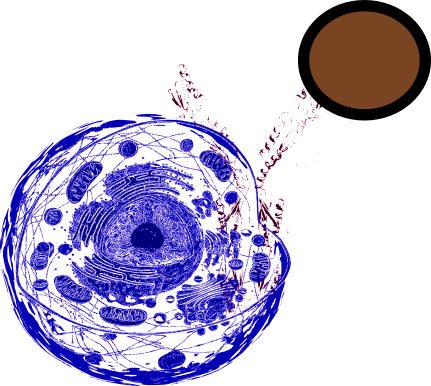
Direct immunohistochemistry uses a single labeled primary antibody that binds directly to the target antigen.
How It Works:
- The primary antibody is conjugated to a detectable marker (enzyme or fluorophore)
- It binds directly to the antigen in the tissue
- The signal is visualized without additional antibodies
Advantages:
- Faster protocol (fewer steps)
- Reduced risk of cross-reactivity
- Simpler workflow
Disadvantages:
- Lower sensitivity (less signal amplification)
- Limited flexibility (each primary antibody must be labeled)
- Higher cost per antibody
Indirect Immunohistochemistry
What Is Indirect IHC?
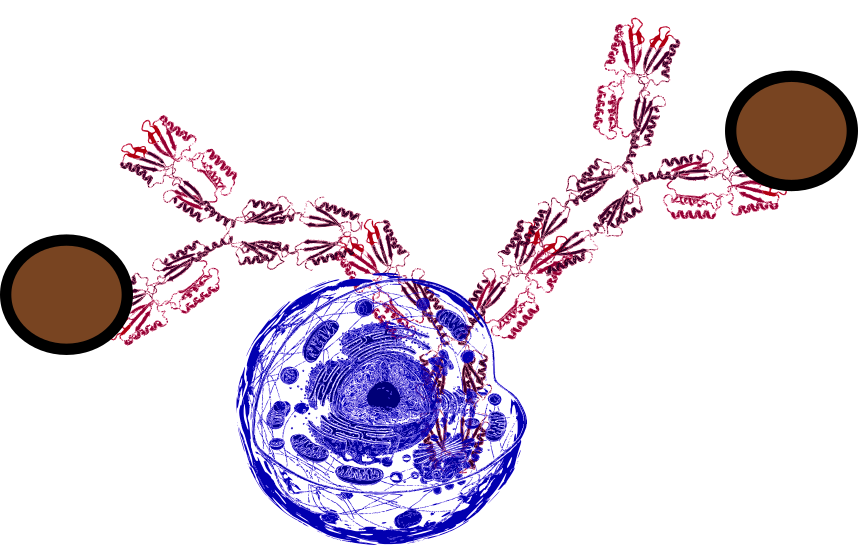
Indirect immunohistochemistry involves an unlabeled primary antibody and a labeled secondary antibody that binds to the primary antibody.
How It Works:
- The primary antibody binds to the antigen
- A labeled secondary antibody binds to the primary antibody
- The signal is amplified due to multiple secondary antibodies binding
Advantages:
- Higher sensitivity (signal amplification)
- Greater flexibility (one secondary antibody can be used with many primaries)
- Cost-effective
Disadvantages:
- Longer protocol
- Potential for non-specific binding
- Requires careful optimization
Direct vs. Indirect IHC: Key Differences
| Feature | Direct IHC | Indirect IHC |
|---|---|---|
| Antibodies used | One (labeled primary) | Two (primary + secondary) |
| Sensitivity | Lower | Higher |
| Time required | Faster | Slower |
| Signal amplification | No | Yes |
| Flexibility | Limited | High |
| Cost efficiency | Lower | Higher |
When Should You Use Each Method?
- Use direct IHC when:
- You need quick results
- The antigen is highly abundant
- Simplicity is a priority
- Use indirect IHC when:
- Sensitivity is critical
- The antigen is low in abundance
- You need versatility in experimental design
Conclusion
Immunohistochemistry is an essential technique for detecting and visualizing proteins within tissue samples. Understanding the differences between direct and indirect IHC is key to selecting the right approach for your experiment or diagnostic application.
While direct IHC offers speed and simplicity, indirect IHC provides superior sensitivity and flexibility—making it the preferred choice in most laboratory settings.
FAQs
What does immunohistochemistry detect?
It detects specific proteins (antigens) in tissue samples using antibodies.
Is indirect IHC more sensitive than direct IHC?
Yes, due to signal amplification from secondary antibodies.
Why is IHC used in cancer diagnosis?
It helps identify tumor markers and classify cancer types accurately.